
Architecture's Nobel just went to buildings that look like they might blow away.
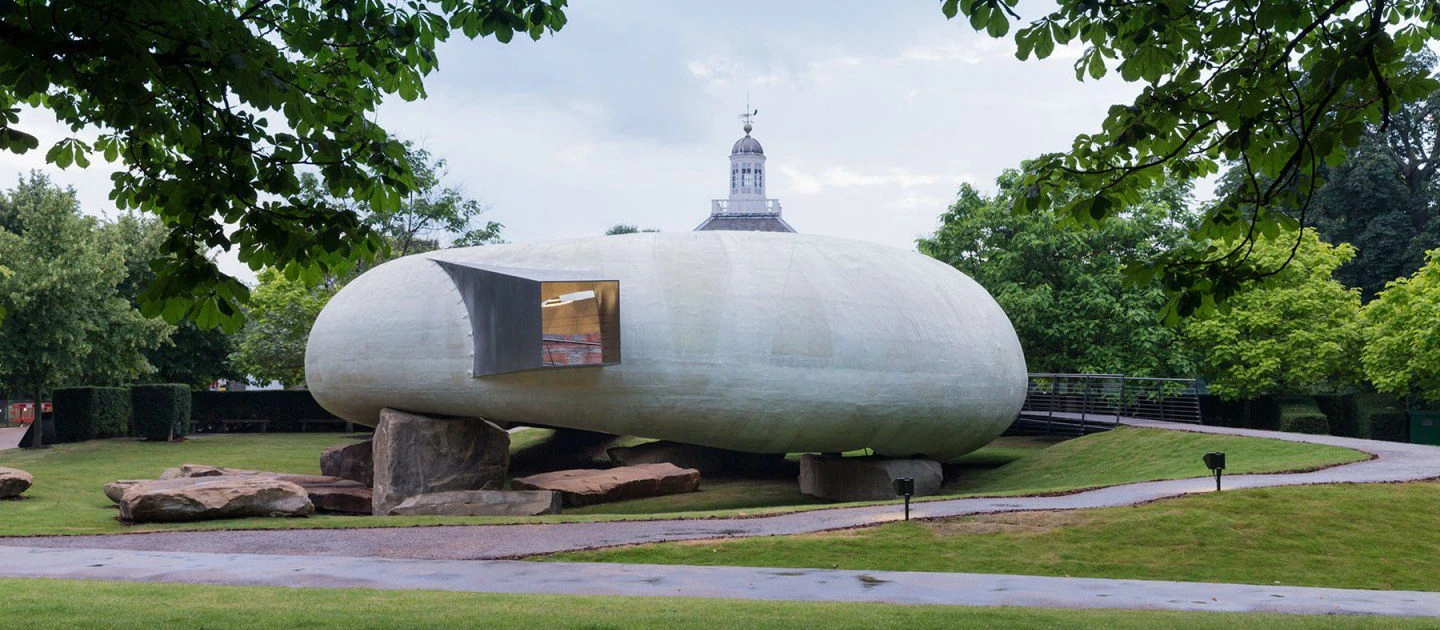
On 12 March 2026, Smiljan Radić Clarke of Santiago, Chile, became the 55th winner of the Pritzker Architecture Prize, and only the fifth from Latin America.2, 3 No skyscraper. No museum with a famous logo. Instead: a roof on rocks, a doughnut in a London park and a theatre that glows like a paper lantern.
The jury summed him up in one line: his work “favours fragility over any unwarranted claim to certainty”.1 In a profession that loves to look permanent, that is close to a provocation.
Who is Smiljan Radić?
Radić was born in Santiago in 1965, to a family with roots in Croatia and England.4, 6 He studied architecture at the Pontificia Universidad Católica de Chile, failed his final exam the first time, graduated in 1989, then went on to study in Venice. He opened his studio in 1995 and has kept it small on purpose.5
His closest collaborator is the sculptor Marcela Correa. They met at university, and she later became his client, then his wife.4 In 2017 he set up the Fundación de Arquitectura Frágil, a foundation for fragile architecture, in Santiago: an archive and public platform for experimental work.3
Five buildings that explain him
You don’t need to read architectural theory to understand Radić. Five buildings are enough.
1. A roof on rocks
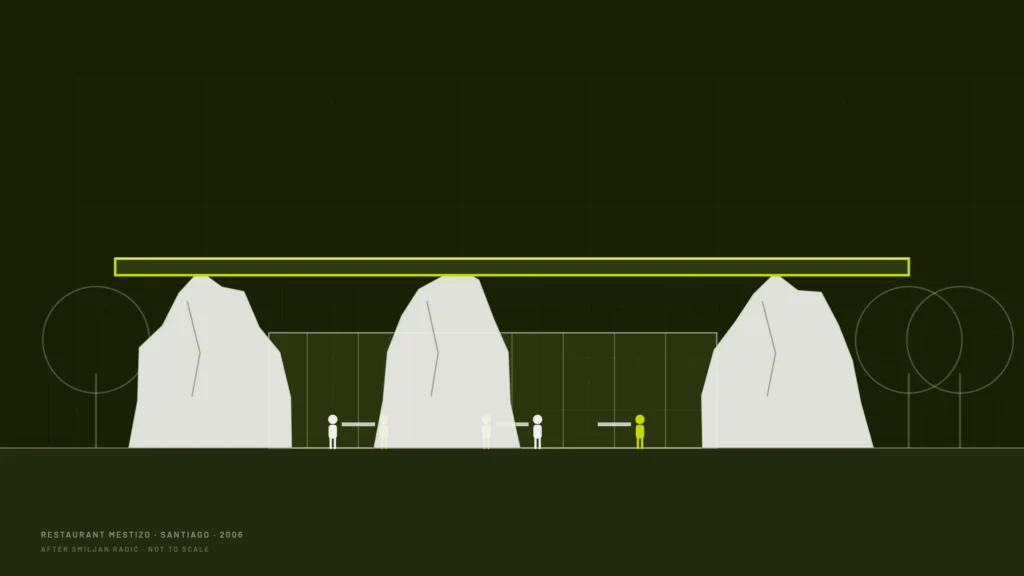
In 2005, Radić won a competition run by the municipality of Vitacura for a restaurant in a public park in Santiago.7 His answer, Restaurant Mestizo, is a long black roof resting on huge granite boulders, the kind you could find anywhere in the park. The stones are not decoration: they carry the roof. His engineer calculated the load on them at about a tenth of what granite can take.8 Radić described them as caryatids, the carved figures that hold up classical temples, replaced by lumps of mountain granite.7
2. The doughnut
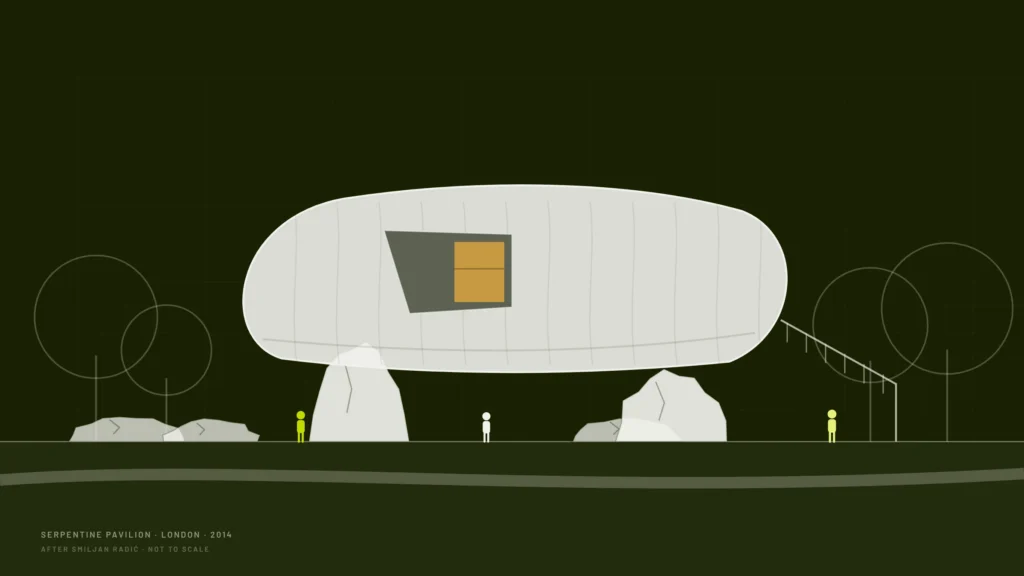
For the Serpentine’s 14th summer pavilion in London, Radić made a thin, translucent fibreglass shell and set it on large quarry stones.9 The BBC nicknamed it “the doughnut”.10 One visitor saw a giant ostrich egg.11 Yes, our second egg in two issues. At night, its amber glow drew people in like moths to a lamp.12
It was built to last one summer. Instead, it was bought, moved and reinstalled in 2015 in the gardens of Hauser & Wirth Somerset, where it still stands.13
3. The paper lantern
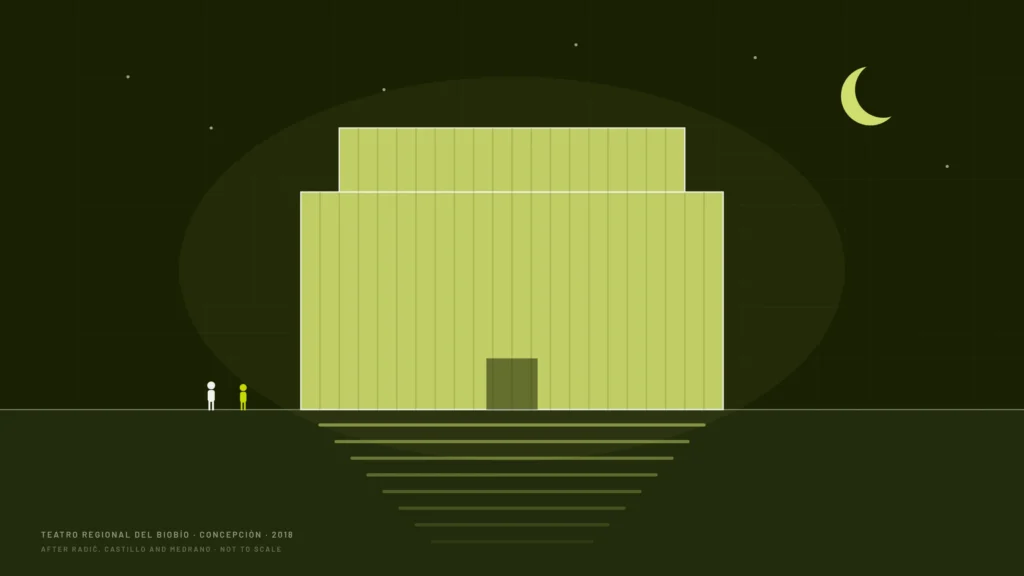
Concepción, in southern Chile, was badly damaged by an earthquake in 2010.14 A year later, Radić, Eduardo Castillo and Gabriela Medrano won the competition for its new regional theatre, which opened in 2018 on the bank of the Biobío River. Its concrete frame is wrapped in a white, translucent, lantern-like skin.15 By day, the skin filters the light and helps the acoustics.3 By night, the whole building glows.
4. A circus on the roof
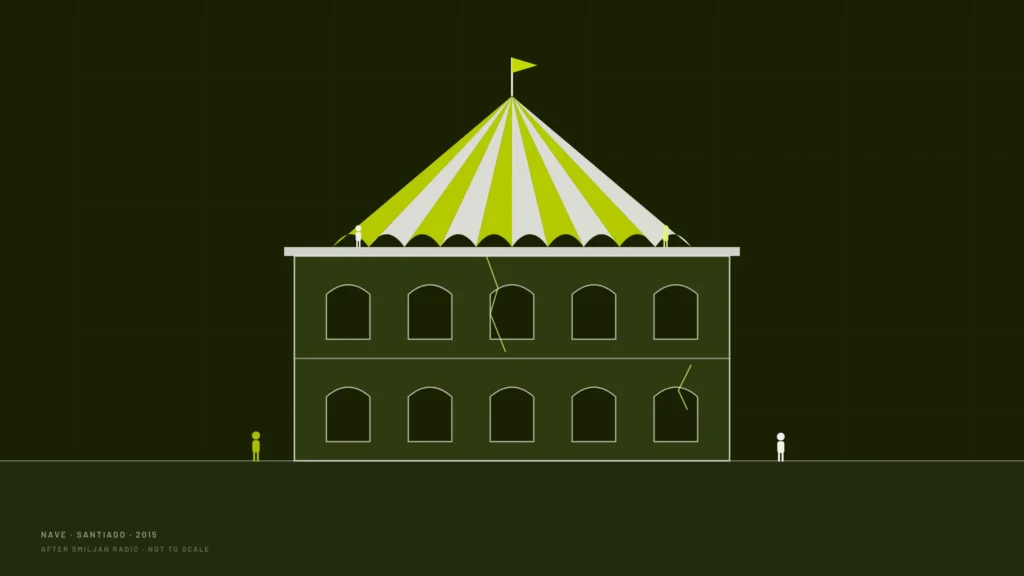
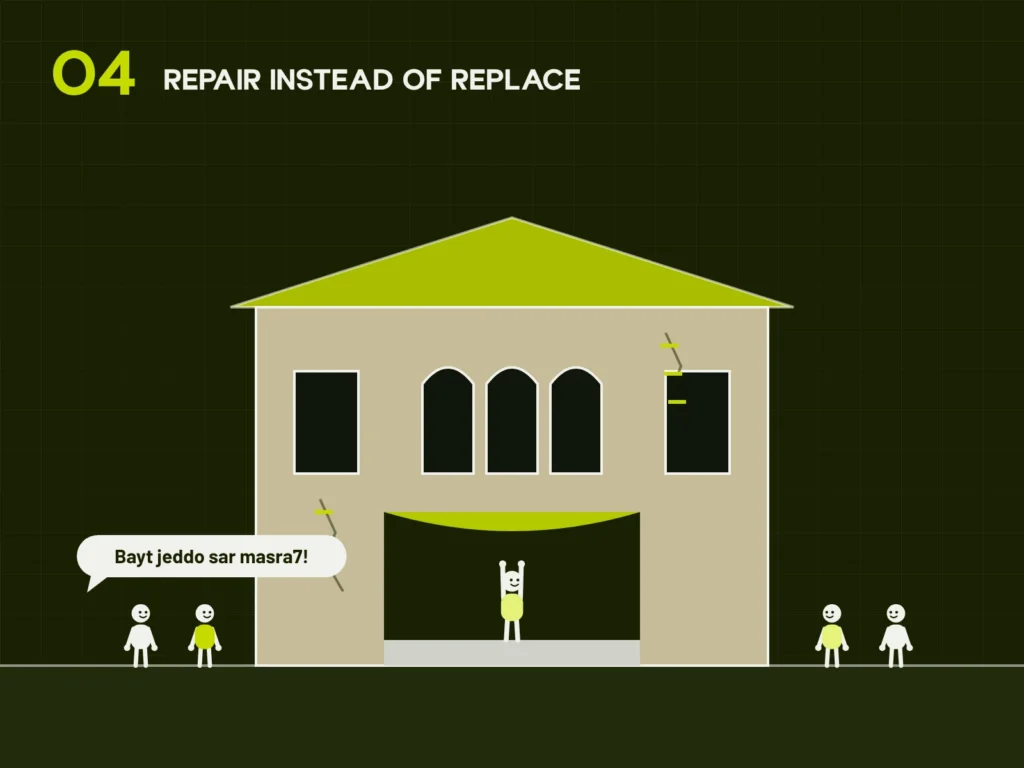
NAVE, a performing arts centre in Santiago completed in 2015, is a damaged early-20th-century house that Radić repaired rather than replaced. On top, he added a roof terrace under a circus tent.3
5. His own house
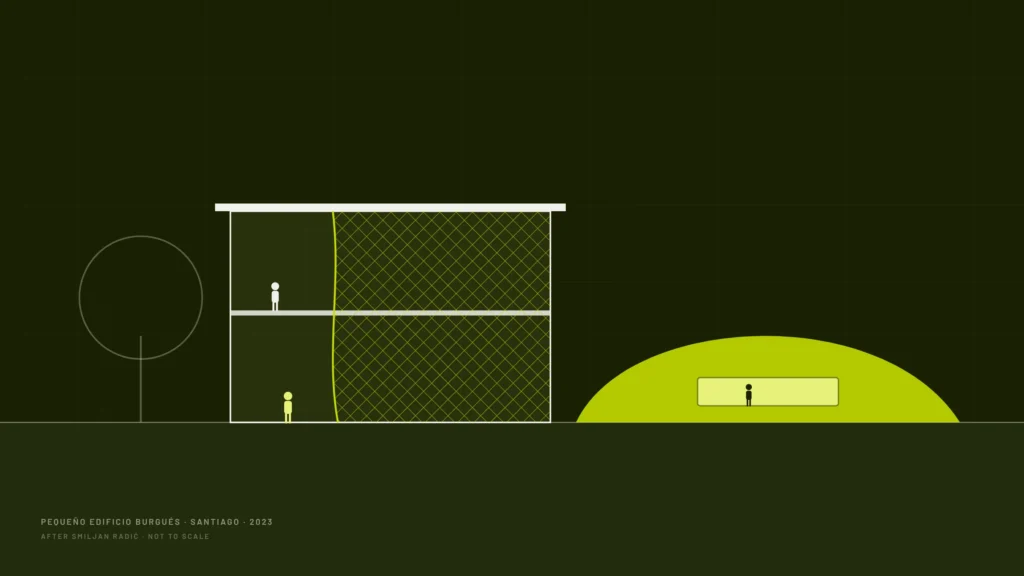
Radić’s home and studio in Santiago, the Pequeño Edificio Burgués (2023), has walls of single-pane glass, curtains of chain-link fence, and a studio partly buried under a mound of earth.3
Fragile is not
the same as weak.
The buildings that look the lightest are often the ones that last.
Our take
What Beirut can borrow
Beirut builds as if heaviness meant safety: thick concrete, sealed glass, buildings that try hard to look permanent. Radić shows another way. Here is what we would borrow from him.
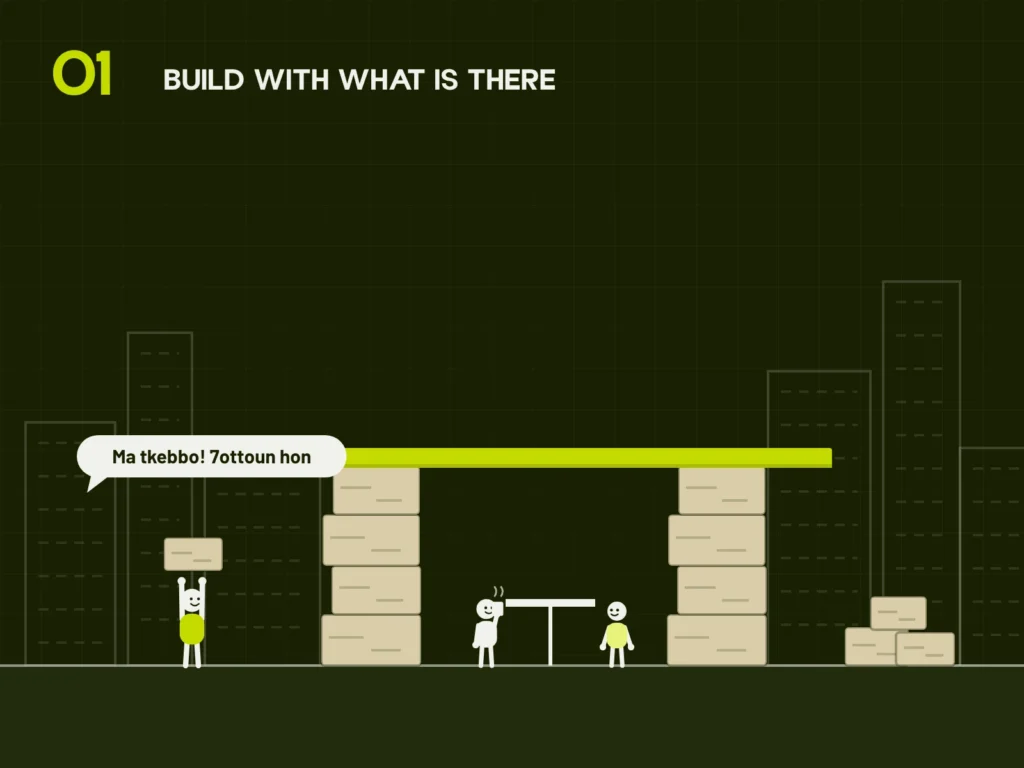
- Build with what is there Mestizo's roof sits on stones like the ones already in its park. Lebanon is full of stone, from mountain quarries to the rubble of old buildings. It could do more than clad our facades.
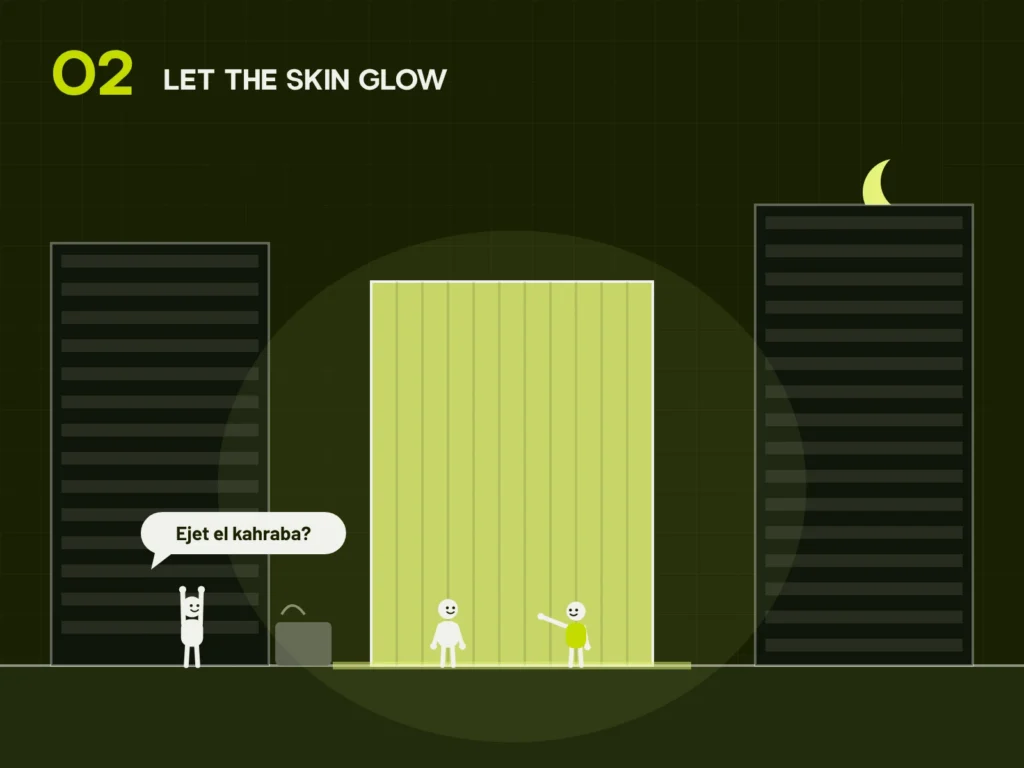
- Let the skin glow The Biobío theatre shows that a building's skin can filter light instead of blocking it. In a city of sealed glass towers, a facade that glows from within is a gift to the street.
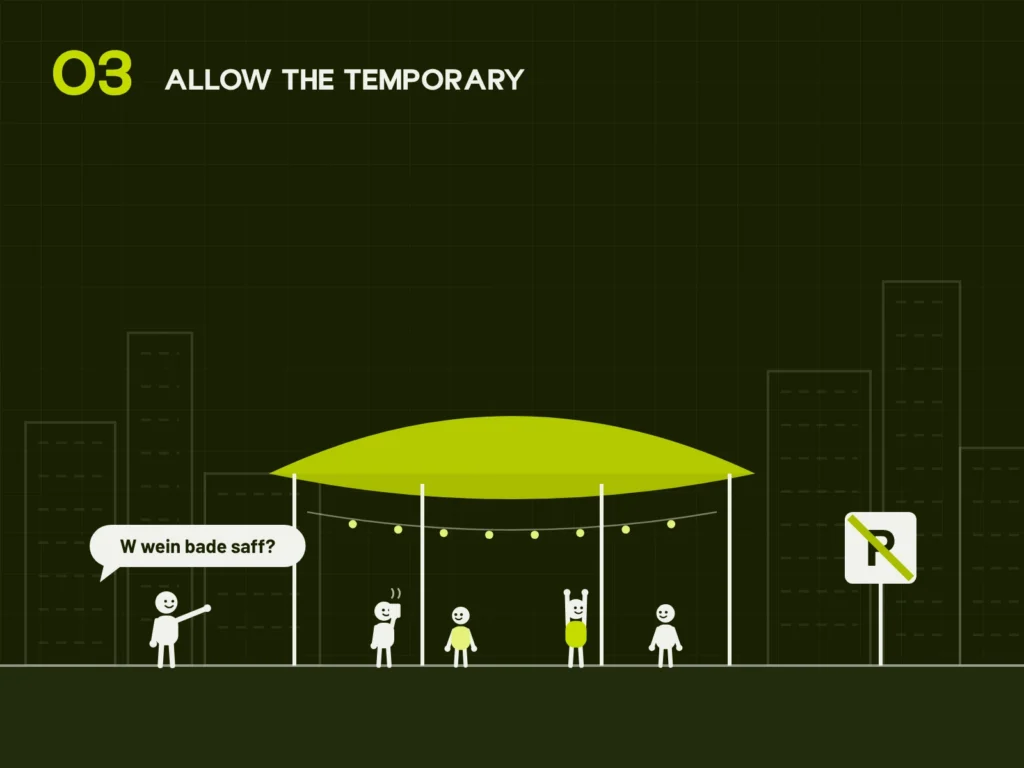
- Allow the temporary The Serpentine Pavilion was built for one summer and is still standing. Beirut's empty plots could host light pavilions that test ideas before anyone pours concrete.
- Repair instead of replace NAVE turned a damaged house into a stage. Beirut has no shortage of damaged old houses waiting for the same chance.
None of this means building cheap or building badly. It means building with care: lighter on the ground, honest about time, and open to change.
Build lighter. Last longer.